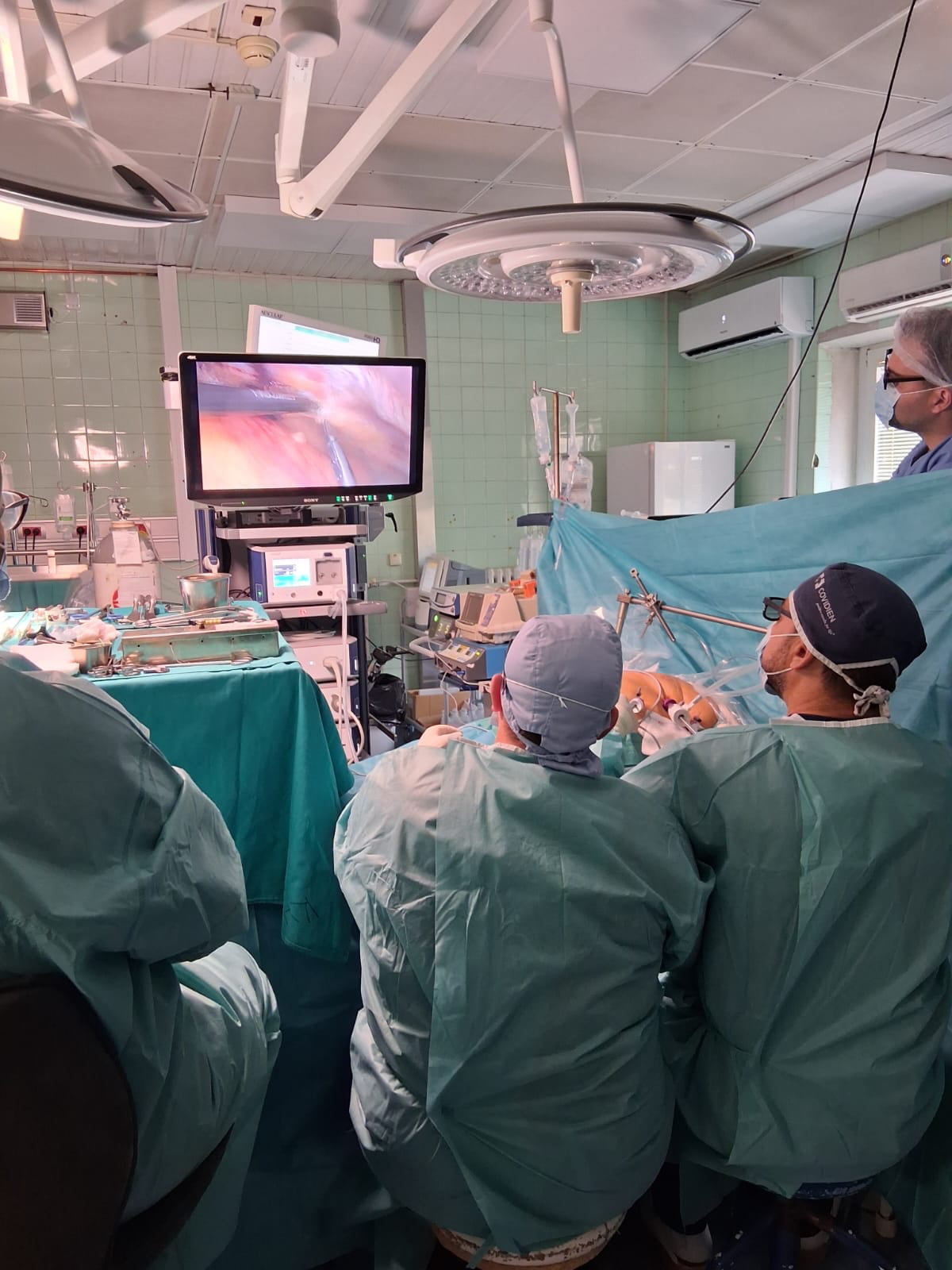
MICS CABG method
The revolution led by Dr. Danko Grujić:
With the assistance of Prof. Albert, he performed the first minimally invasive bypass surgery in Serbia on June 10, 2022. Since then, he has been introducing this method into Serbian cardiac surgery.
Minimally invasive bypass on a beating heart:
MICS CABG METHOD – About the Method
MICS CABG method Minimally invasive coronary artery bypass surgery is a surgical technique that reduces the invasiveness of traditional bypass by performing the procedure through significantly smaller incisions, typically via an anterolateral minithoracotomy performed by Dr. Danko Grujić.
The MICS CABG method has similar results to conventional beating heart procedures, but with a key advantage: A total sternotomy (cutting the breastbone) and its associated complications are avoided.
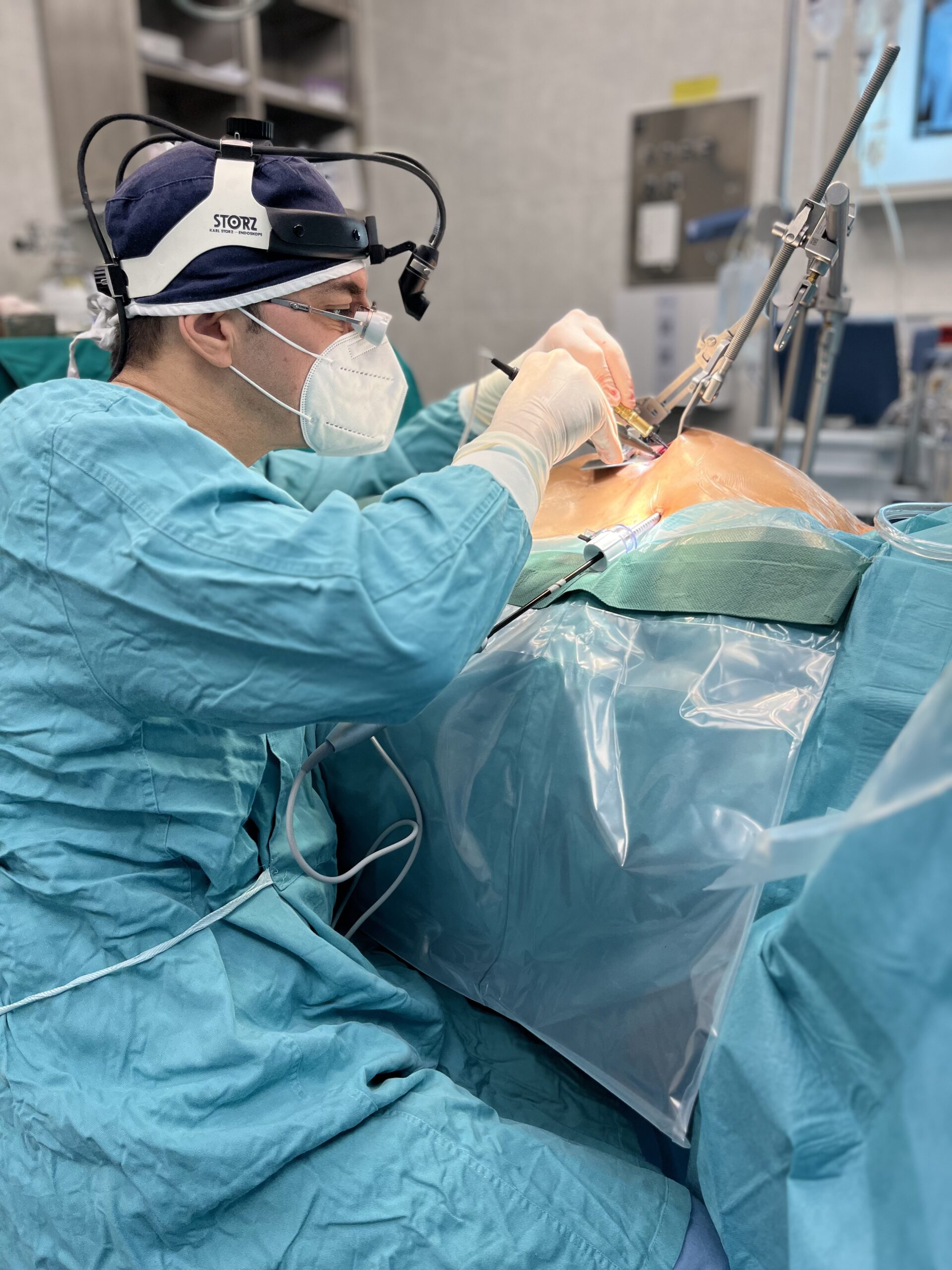
Since the sternotomy (the midline incision of the breastbone) can cause healing problems or chronic pain in nearly 30% patients, and with recovery from conventional bypass surgery approaching one year, there has been a great need for the development of new techniques to avoid these adverse effects and To reduce the invasiveness of classic cardiac surgery, and at the same time to maintain the proven benefit of bypass grafts, especially arterial grafts.
In the early 2000s, attempts to perform less invasive bypass procedures were limited to the MIDCAB procedure, which is itself a variation of the first bypass operation that was In 1964, performed by Vasily Kolesov through thoracotomy.
With the exception of a few individual cases, multivessel coronary bypass grafting (MICS CABG) was not considered feasible until 2009, when the first series of cases was published. Since then, the gradual development of this technique, which makes it possible, has begun. Treatment of multivessel disease with a minimally invasive method.
Results, feasibility, safety, and long-lasting Numerous studies have shown the benefits of this procedure. Despite this, this demanding procedure, which has a steep learning curve, has remained reserved for only a few cardiac surgery centers in the world.
MICS CABG Method – Advantages
Clinically: Over 80% patients were alive and had no cardiac events 10 years after MICS CABG surgery in a large study. MICS CABG is also associated with very with a low rate of blood transfusion (in our series less than 1%), with very with low perioperative mortality and morbidity, as well as an almost non-existent surgical site infection.
Economically: The duration of the operation is approximately the same as a standard bypass operation. The cost of acquiring equipment for these operations is approximately the same as a classic bypass operation. However, The average hospital stay is almost twice as short for MICS CABG surgeries (in our 4-day series), returning to your employer and usual activities after only 2 weeks (compared to several months after traditional surgery). The ability to use the upper extremities is significantly accelerated in patients who have undergone the MICS CABG procedure.
AestheticallyThe cosmetic effect of this procedure is incomparably better than with classic bypass surgeries.
Quality of life: MICS CABG on a beating heart is associated with with a significantly better quality of life in comparison with the classic CABG surgery involving the splitting of the sternum. The ongoing MIST study is evaluating the quality of life of patients after this minimally invasive procedure.
For the hospital: Competitive differentiation, marketing opportunities, the ability to build educational teams.
The robot can be used, but it is not necessary to perform this procedure.
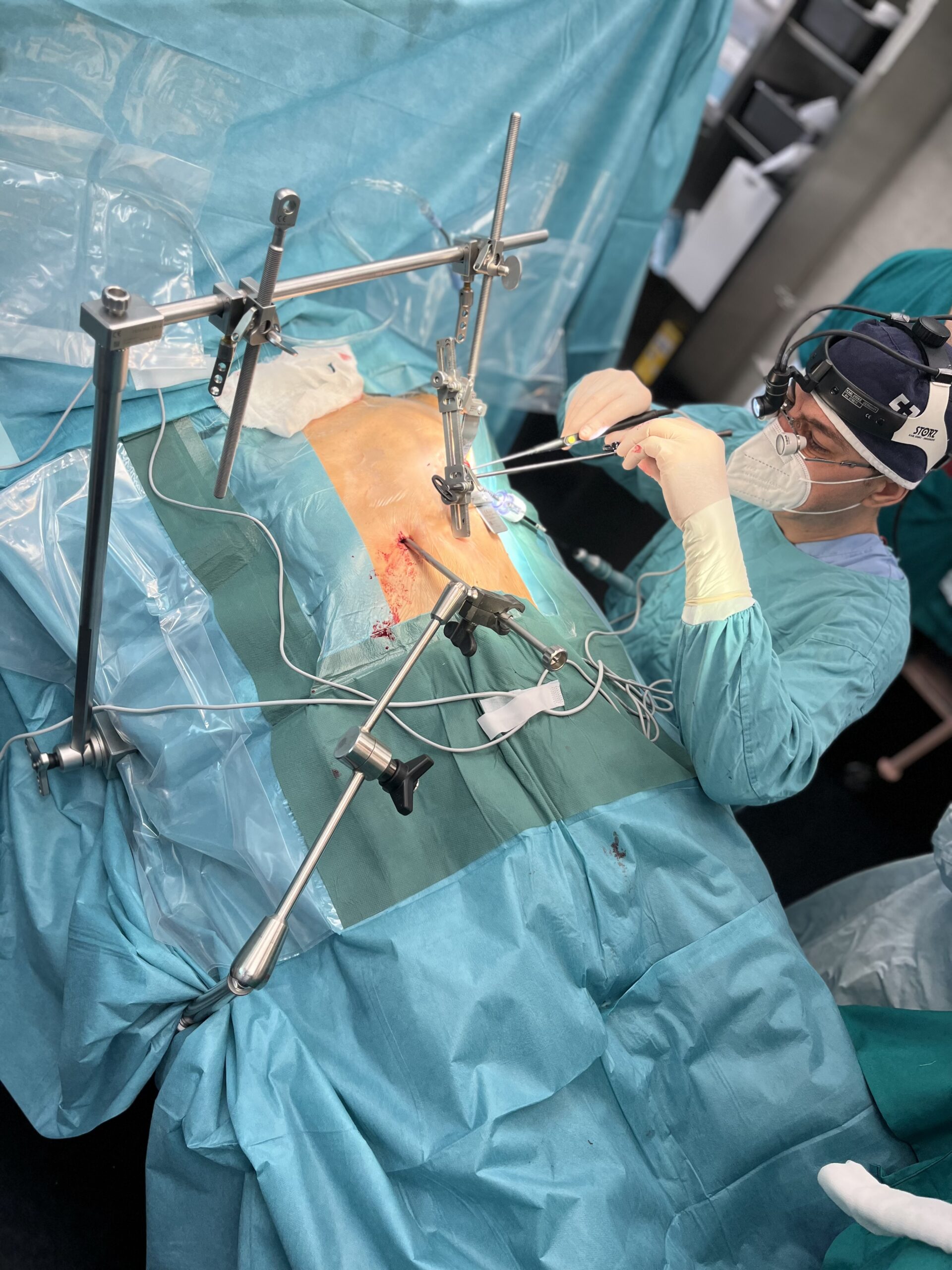
MICS CABG Method – The efficacy and safety of the method have been confirmed by numerous global clinical studies, including research by Dr. Dank and his team. Detailed comparative studies on efficacy Minimally Invasive Coronary Artery Bypass Grafting The methods and their advantages over traditional procedures are available in the scientific database. Google Scholar, where the results of thousands of successfully recovered patients worldwide are analyzed.
Quintuple Arterial Minimally Invasive Coronary Artery Bypass Grafting: Non-touch Aortic Technique. Available here
Minimally Invasive Direct Coronary Artery Bypass Grafting: Surgical Technique and Results. Brazilian Journal of Cardiovascular Surgery.
Five-vessel bypass surgery performed on September 30, 2024.
MICS CABG method – Indications
Main stem disease, severe multivessel disease, especially in diabetics, severely stenotic lesions or stenosis of pre-existing stents. That decision is made by heart Teams at the institutional level.
With this minimally invasive method, can also perform some procedures that are not performed in classical cardiac surgery, such as the treatment of single-vessel disease of the right coronary artery (the aforementioned right MIDCAB and isolated left coronary system disease).
By this method We can also operate on somewhat more obese patients, which is not uncommon in the context of coronary disease, as well as women with large breasts., who we know are at high risk of experiencing some complication as a result of the sternum being cut during a traditional operation. These complications can sometimes be life-threatening. This is shown by our experience and so far, the results.
Endoscopic Preparation of the Internal Mammary Artery – Video-Assisted MICS CABG
In order to further improve minimally invasive coronary surgery, the preparation of the internal mammary artery (LIMA or RIMA) can also be performed completely endoscopically., using 3D technique. This technique allows precise preparation of arterial graft under magnified high-resolution view, using endoscopic optics and specialized instruments through minimal approaches.
Endoscopic harvesting enables preservation of graft integrity with significantly less surgical trauma, reduced soft tissue dissection, and further reduction of the operative incision. This creates conditions for Faster functional patient recovery, uz achieving all the benefits of total arterial revascularization.
After completion of endoscopic graft preparation, myocardial revascularization is performed through a small anterolateral thoracotomy on a beating heart, by applying standard principles of minimally invasive coronary surgery.
This approach requires high level of technical expertise and operational team experience, but allows for further improvement of the minimally invasive concept while preserving the safety and quality of surgical revascularization.